Marcescence: The Winter Leaves That Refuse to Fall
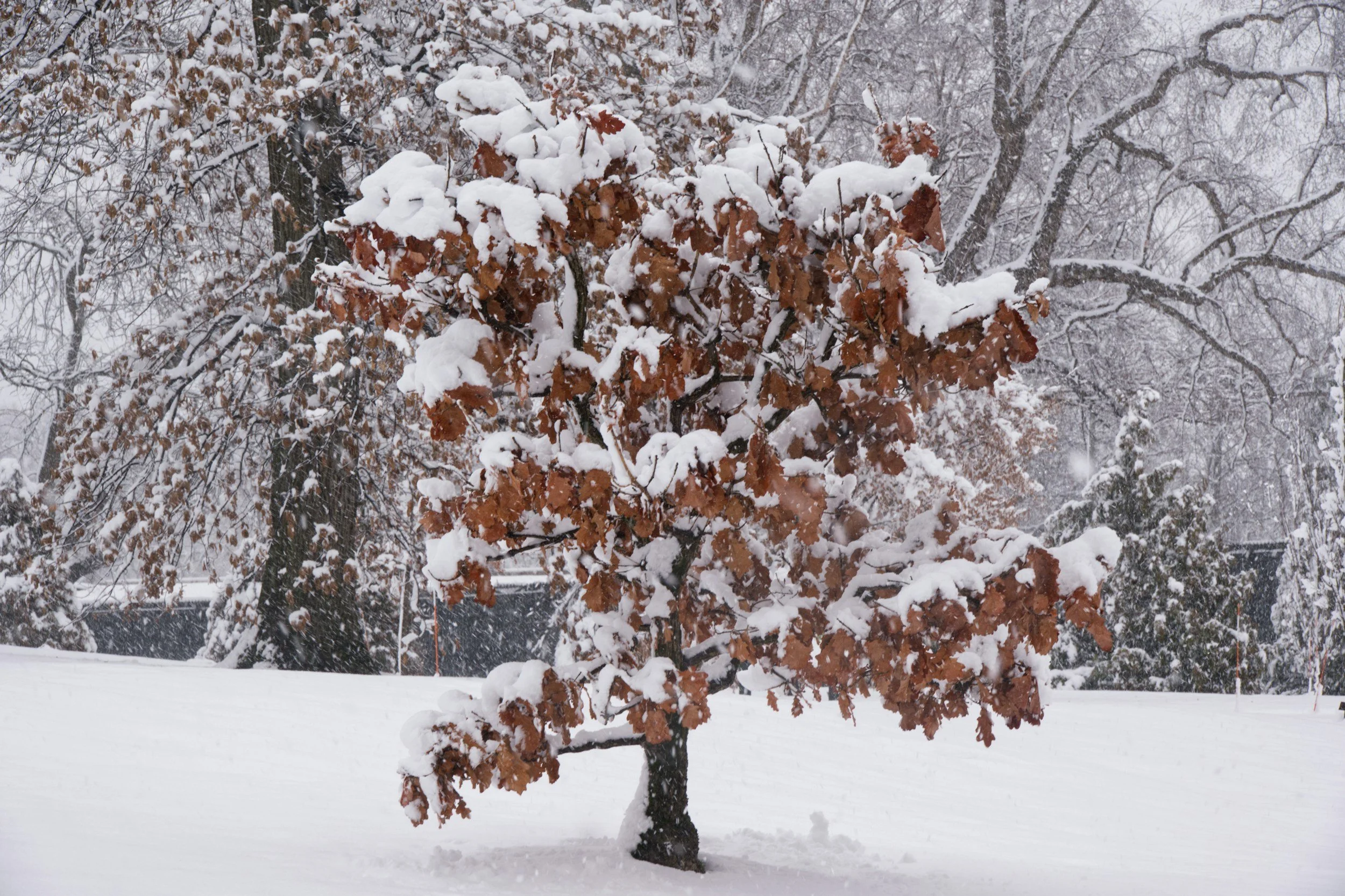
In the quiet of winter, when most trees stand bare against the cold sky, some still hold onto their dry, copper-colored leaves. This phenomenon, known as marcescence, gives the forest a haunting beauty—rustling whispers of autumn that linger deep into the cold months.
What Is Marcescence?
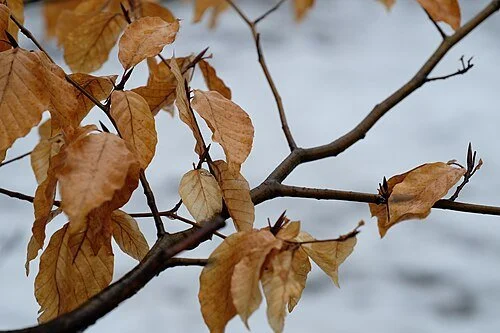
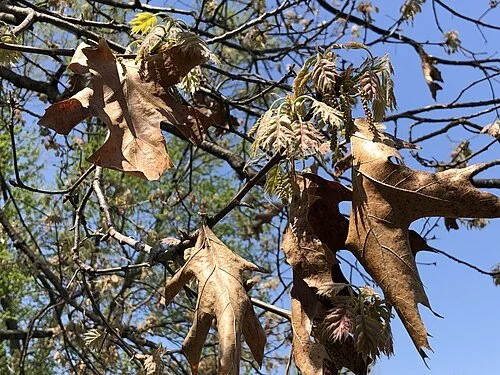
Marcescence occurs when certain deciduous trees retain their dead leaves through winter instead of shedding them in autumn. Normally, trees form a specialized layer of cells called the abscission layer at the base of each leaf stem. This layer weakens the connection between the leaf and the branch, allowing the leaf to fall away cleanly.
In marcescent trees, this abscission layer does not fully develop before winter sets in. As a result, the leaves remain attached, clinging to the branches until spring growth pushes them off.
Trees That Exhibit Marcescence
Several species are known for this trait, including:
Oaks (Quercus spp.)
American Beech (Fagus grandifolia)
Hornbeam (Carpinus spp.)
Witch Hazel (Hamamelis spp.)
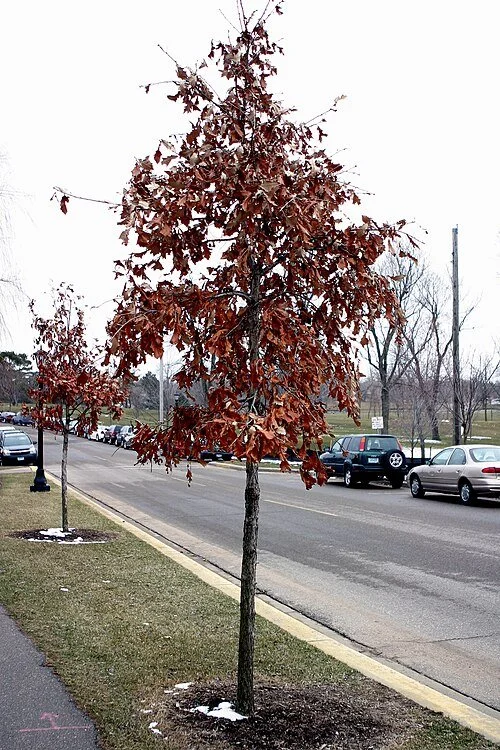
Interestingly, marcescence is most often seen in younger trees or on the lower branches of mature ones. This suggests that the phenomenon may serve a developmental or protective purpose.
Why Do Some Trees Keep Their Leaves?
While the exact reasons for marcescence are still debated, several theories offer insight:
Protection from Browsing Animals
Retained leaves may make twigs less palatable or harder to reach for deer and other herbivores during winter.Delayed Nutrient Return
By holding onto leaves until spring, trees may allow nutrients to return to the soil closer to the time of new growth, when they are most needed.Moisture Retention
The presence of dry leaves may help trap snow around the base of the tree, providing extra moisture as it melts.Developmental Timing
Younger trees may simply not have the same hormonal or structural maturity to form a complete abscission layer before winter.
The Beauty of Persistence
Marcescent leaves shimmer in the low winter light, their faded golds and browns contrasting against snow and bark. They create a soft rustling sound in the wind, a reminder that even in dormancy, the forest is alive.
Marcescence is more than a botanical curiosity—it’s a quiet symbol of endurance. These trees hold onto what remains, waiting patiently for the warmth of spring to release what no longer serves them. In that way, they mirror the cycles of resilience found throughout nature—and within ourselves.
