The Mystery of Tree Masting: Nature’s Synchronized Strategy for Survival

Acorns on masting season
In forests across the world, certain tree species engage in a remarkable natural phenomenon known as masting—a synchronized, large-scale production of seeds that occurs at irregular intervals. During a mast year, trees of the same species (and often across species) release an overwhelming abundance of seeds, flooding the ecosystem with food and opportunity. This event is not random; it is a deeply evolved survival strategy that reveals the intricate intelligence of forest ecosystems.
What Is Masting?
Masting, or mass seeding, refers to the irregular, synchronized production of seeds by a population of plants. Instead of producing a steady number of seeds each year, mast species alternate between years of low seed output and years of extraordinary abundance. This pattern can occur every few years, depending on the species and environmental conditions.
Species That Mast
Many tree species around the world exhibit masting behavior. Some of the most well-known include:
Oaks (Quercus spp.) – Known for their acorn mast years, which can occur every 2–5 years.
Beeches (Fagus spp.) – Often synchronize their heavy nut production across vast regions.
Pines and Spruces (Pinus and Picea spp.) – Conifers that mast in cycles of 3–7 years, depending on climate and latitude.
Birches (Betula spp.) – Frequently mast in response to favorable weather conditions, often in synchrony with other northern hardwoods.
The Periodic Cycle of Masting
The timing of mast years varies widely among species and regions. Some trees follow relatively predictable cycles, while others respond to environmental cues such as temperature, rainfall, or nutrient availability. For example, oak trees in temperate regions may mast every 2–5 years, while tropical dipterocarps in Southeast Asia may synchronize their masting with El Niño weather patterns.
This irregularity is key to the strategy’s success. If trees produced large seed crops every year, seed predators—such as squirrels, birds, and insects—would maintain high populations and consume most of the seeds. By spacing out mast years unpredictably, trees prevent predator populations from stabilizing at high levels.
The Science Behind Synchronization
One of the most fascinating aspects of masting is how trees coordinate their seed production across large areas. Scientists believe this synchronization arises from a combination of environmental cues, chemical signaling, and underground communication networks.
Environmental cues such as temperature fluctuations, droughts, or specific seasonal patterns can trigger flowering and seed production simultaneously across a region.
Resource dynamics also play a role. Trees require significant energy to produce seeds, so they may spend several years accumulating resources before a mast year.
Chemical signaling through airborne compounds or root networks (mycorrhizal fungi) may help trees “communicate” and align their reproductive timing, ensuring collective success.
Recent scientific thinking suggests that mycelial fungi in the soil—the vast underground networks of fungal threads connecting tree roots—could play a crucial role in this communication. These mycorrhizal networks, sometimes called the “wood wide web,” allow trees to exchange nutrients, hormones, and possibly even chemical signals. Some researchers propose that these fungal connections might transmit cues that help trees “team up” and coordinate mass seed production across entire forests. This idea highlights the deep interdependence between trees and fungi, suggesting that masting may be a collaborative act not only among trees but also between species across kingdoms.
The Energy Trade-Off: Growth or Reproduction
Plants constantly balance how they use their energy and resources. They must “decide” whether to invest in growth—developing more roots, leaves, and branches—or in reproduction, producing flowers, fruits, and seeds. Masting represents a major investment in reproduction. When trees commit to a mast year, they channel enormous amounts of stored energy into producing seeds, often at the expense of growth. This process can leave them depleted, requiring several years of recovery before they can build up enough resources to reproduce again. During these resting years, trees focus on replenishing nutrients, expanding root systems, and restoring their energy reserves for the next cycle of abundance.
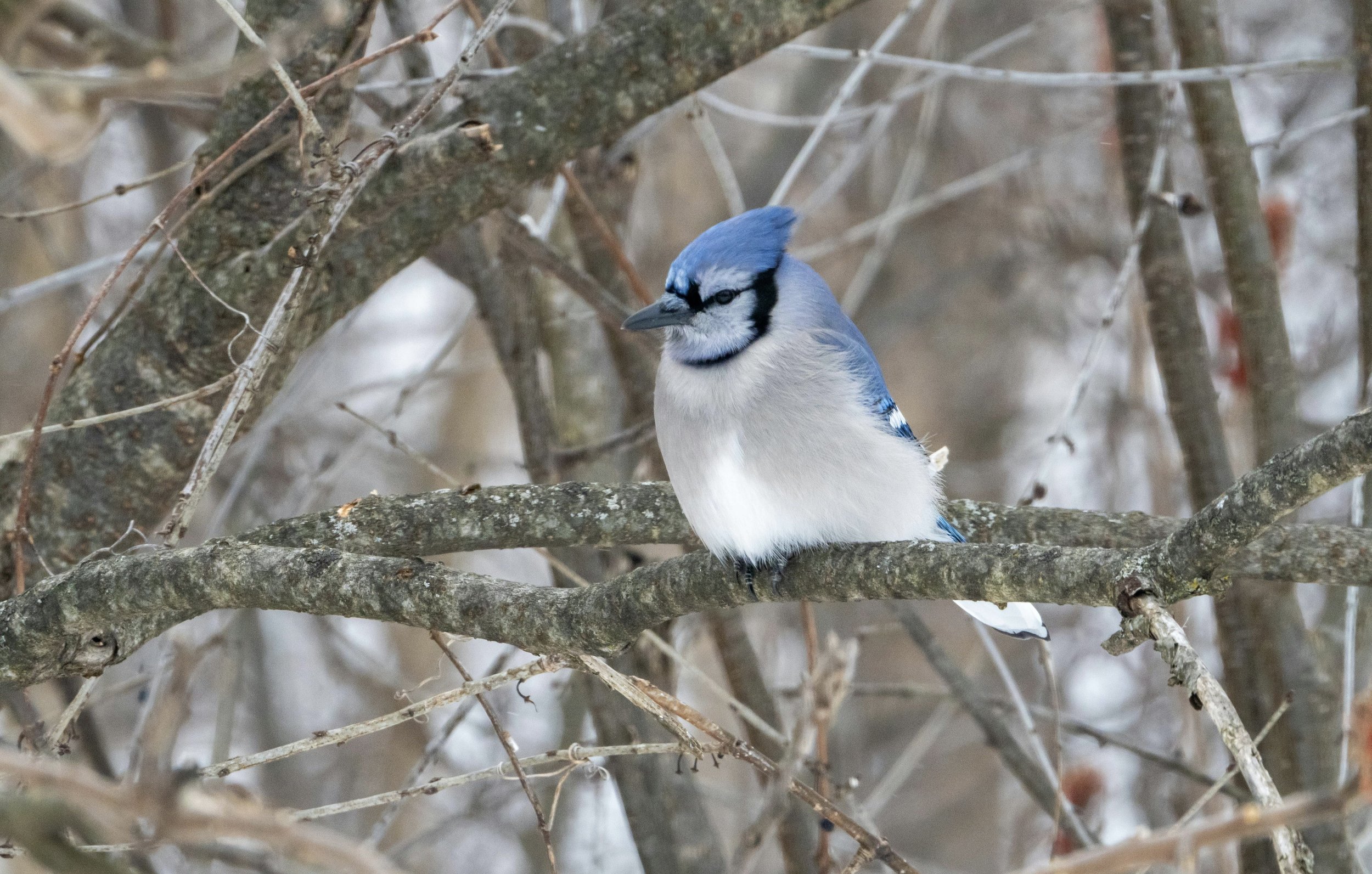
Blue jay
The Predator Satiation Strategy
The central evolutionary advantage of masting lies in predator satiation. During non-mast years, low seed production keeps predator populations small. When a mast year arrives, the sudden flood of seeds overwhelms these predators. Even though many seeds are eaten, the sheer volume ensures that countless others escape consumption and germinate successfully.
This strategy increases the likelihood of seed survival and dispersal. It also influences the behavior and population cycles of animals that depend on seeds for food. For example, rodent populations often surge after mast years, which in turn affects predator species such as owls and foxes. Thus, a single mast event can ripple through the entire food web.
The Growth Phases of Trees and Seeds
Following a mast year, the seeds that escape predation begin their journey through several growth phases:
Dormancy – Many seeds rest through winter or dry seasons, awaiting the right conditions to germinate.
Germination – Triggered by moisture, temperature, and light, the seed’s embryo awakens and begins to grow.
Seedling Stage – The young plant establishes roots and begins photosynthesis, competing for light and nutrients.
Juvenile Growth – The tree invests energy in height and leaf production, building strength for future reproduction.
Maturity – Once fully grown, the tree joins the forest canopy and eventually contributes to the next mast cycle.
Each phase is influenced by environmental conditions, soil health, and the surrounding ecosystem. The success of these stages depends heavily on the timing and abundance of seed release during mast years.
The Wisdom of the Forest
Masting is more than a reproductive strategy—it is a testament to the deep intelligence of natural systems. Through synchronization, resource sharing, and ecological timing, trees ensure the survival of their species while supporting the broader web of life. The forest, in this sense, acts as a single organism, pulsing with cycles of abundance and rest.
In observing masting, one witnesses the profound cooperation that defines nature: a quiet, collective rhythm that sustains life across generations, guided not only by the trees themselves but also by the unseen fungal networks that weave them together beneath the soil.
